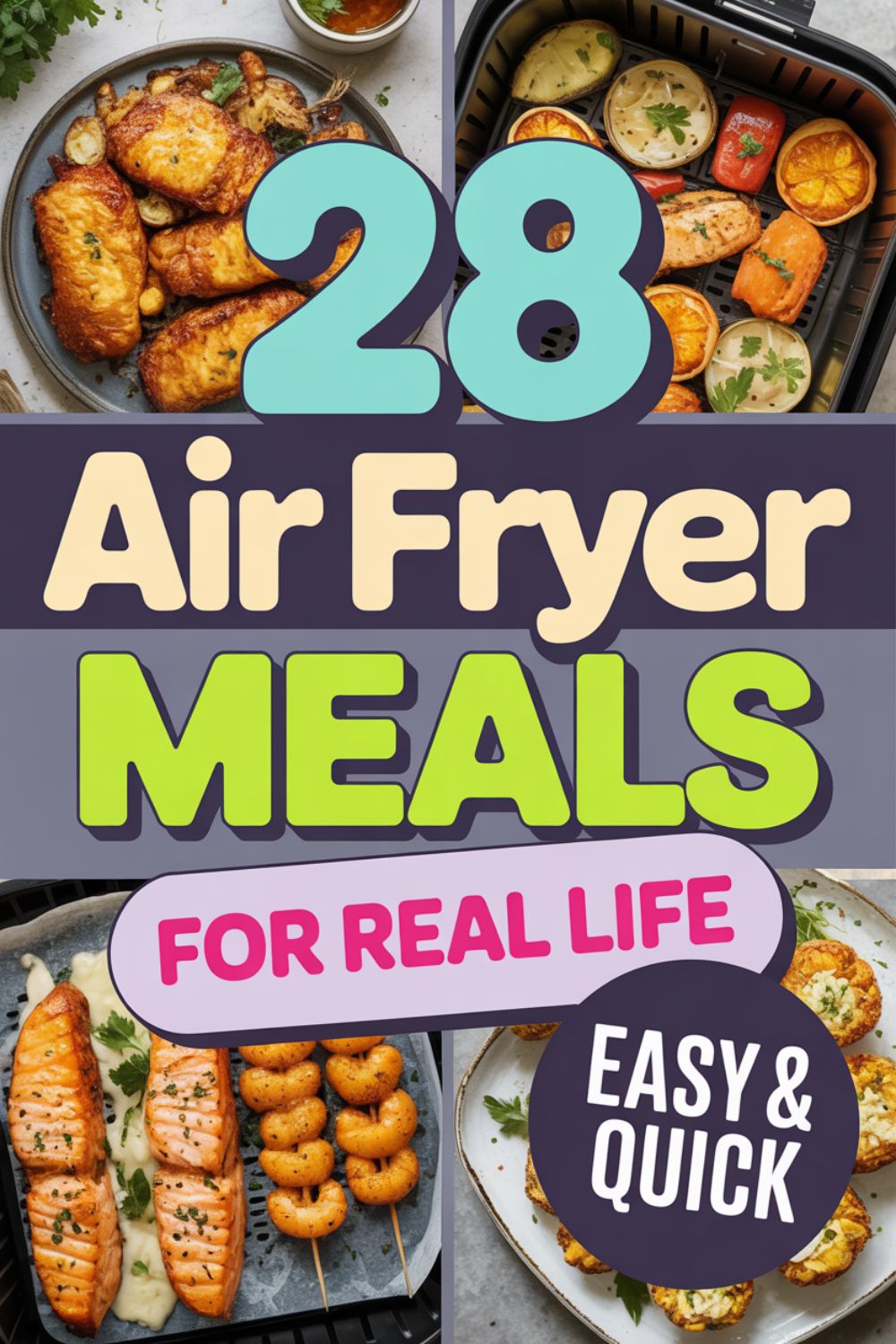
28 Easy Air Fryer Meals for Real Life
Look, I’m not here to tell you the air fryer will change your life or solve all your dinner problems. But after three years of using mine almost daily, I can say this: it’s the most honest kitchen appliance I own. No pretense, no fancy settings you’ll never use—just hot air and a timer that actually works.
We’re talking about meals that fit into actual human schedules. The kind of cooking you do when you’ve got 20 minutes, half a brain cell left from the day, and a desperate need for something that doesn’t taste like cardboard. These aren’t Instagram-worthy productions. They’re real dinners for real people who are really tired.
I’ve tested everything from basic air fryer baskets to those fancy dual-zone models, and honestly? The simple ones work just fine for most of what you’ll actually cook. But we’ll get into that.
Why the Air Fryer Actually Makes Sense
Here’s the thing nobody tells you upfront: the air fryer isn’t magic, and it won’t make kale taste like french fries. What it will do is cook food faster than your oven, use less energy, and—this is the big one—cut down on the amount of oil you need without turning everything into sad, dry hockey pucks.
According to research on air frying methods, you can reduce fat content by up to 80% compared to traditional deep frying. That’s not just marketing speak—it’s actual science happening in your kitchen. The hot air circulation creates that crispy exterior we all crave while keeping the inside moist.
I’m not saying you need to throw out your oven or ban yourself from ever deep-frying again. But if you’re like me and find yourself eating takeout three times a week because cooking feels like too much work, the air fryer might actually get you back in the kitchen. It’s fast enough that you won’t give up halfway through and order pizza instead.
The Basics Nobody Bothers Explaining
Before we dive into specific meals, let’s talk about what actually happens inside that machine. Your air fryer is basically a tiny, aggressive convection oven. A heating element warms the air, and a powerful fan blasts it around your food at speeds that would make your regular oven jealous.
This rapid air movement is what creates the crispy texture without dunking everything in oil. The downside? Space. Most air fryers are smaller than you think, which means cooking for four people might require two batches. Not ideal when everyone’s hangry, but still faster than the oven.
Temperature sweet spots: Most of what you’ll cook lives between 350°F and 400°F. Lower temps for reheating or cooking delicate items, higher temps for getting that crispy char on vegetables or proteins. Don’t overthink it—most recipes will tell you exactly what to set.
The basket holes are there for a reason. They let hot air circulate underneath your food, which is why flipping halfway through actually matters. I forget this constantly, then wonder why one side is perfect and the other is pale. Learn from my mistakes.
Morning Meals That Don’t Require Full Consciousness
Breakfast might be the most important meal of the day, but it’s also the one where I’m least functional. The air fryer has saved me from cereal-for-breakfast fatigue more times than I can count. These aren’t fancy brunch recipes—they’re what you make when you need protein and something that resembles real food before your first meeting.
Egg cups in ramekins work surprisingly well. Crack a couple eggs into oven-safe ramekins, add whatever leftovers you find (cheese, spinach, diced ham), and air fry at 320°F for about 10 minutes. The whites set while the yolks stay runny. Pop them out onto toast and you’ve got a breakfast that looks like you tried.
If you’re looking for more structured breakfast inspiration, these 5-ingredient breakfast ideas are genuinely helpful. I’ve made the bacon-egg combos more times than I’d admit in polite company. Get Full Recipe.
Hash browns from scratch sound ambitious but aren’t. Grate a potato (yes, by hand—builds character), squeeze out the moisture with a kitchen towel, season with salt and pepper, form into patties, and spray with a bit of oil from an oil mister. Eight minutes at 400°F, flip, eight more minutes. They’re not McDonald’s, but they’re crispy and you made them yourself.
For more substantial morning meals, I keep coming back to these breakfast sandwiches that actually travel well if you’re eating on the go.
Lunch Options That Don’t Make You Feel Like You’re Dieting
Lunch is where most of us fall apart. It’s either leftovers that you’re sick of or a sad desk salad that leaves you raiding the snack drawer by 3 PM. The air fryer bridges the gap between “I should eat something healthy” and “I want actual food.”
Leftover transformation is the air fryer’s secret superpower. Last night’s pizza? Three minutes at 350°F and it tastes better than when it arrived. Rice that’s gone hard in the fridge? Toss it with an egg, some frozen peas, and soy sauce, then air fry in a cake pan at 360°F for 12 minutes, stirring halfway. You’ve just made fried rice without standing over a hot wok.
Speaking of lunches, I’ve been rotating through these simple lunch ideas that don’t require planning ahead. The quesadilla hack alone is worth checking out. Get Full Recipe.
Chicken thighs are criminally underused for lunch. They’re cheaper than breasts, harder to overcook, and actually have flavor. Season them (salt, pepper, garlic powder—we’re not trying to win awards here), and air fry at 380°F for about 20 minutes, flipping once. Slice them up and toss into a grain bowl with whatever vegetables you’ve got. Add some pre-made tahini dressing because making your own is aspirational and we’re being realistic.
For a lighter option that’s still filling, try these veggie bowls. I’ve made the roasted chickpea version probably thirty times. It’s one of those meals that feels healthy without making you suffer.
The Dinner Zone: Where Things Get Real
Dinner is pressure. Everyone’s tired, everyone’s hungry, and somehow you’re supposed to produce something that resembles a balanced meal. The air fryer won’t solve all these problems, but it’ll at least get food on the table before people start getting mean.
Salmon is stupidly easy. Pat it dry (this matters), season with salt and whatever else you have (lemon pepper works), put it in at 400°F for 8-10 minutes depending on thickness. No flipping needed. It comes out with a slightly crispy top and tender middle. Pair it with some air-fried vegetables and you’ve got a meal that could pass for intentional.
When I need something more substantial, these high-protein bowls have saved countless weeknight dinners. They’re basically throw-everything-in-and-hope-for-the-best cooking, which is my natural state.
Pork chops deserve more respect. Get ones that are about an inch thick, season them (dry rubs work great here), and cook at 375°F for 12 minutes, flipping halfway. Use a meat thermometer to check—165°F means they’re done and still juicy. Serve with mashed potatoes that you definitely didn’t make from a box (but actually did, and that’s fine).
If you’re feeding a family and need something that feels more traditional, check out these 10-minute dinners. Some of them push the time limit by a few minutes, but they’re all pretty honest about what you’re getting into.
Snacks and Sides That Actually Matter
Let’s be honest—sometimes you just need to eat something crispy and satisfying without committing to a full meal. Or you’ve made a main dish and realized you forgot about sides until five minutes ago. The air fryer excels at both scenarios.
Brussels sprouts haters, hear me out. Trim them, cut in half, toss with olive oil and salt, then air fry at 375°F for 15 minutes, shaking the basket halfway through. They get crispy on the outside, tender inside, and lose that bitter sulfur thing that makes people hate them. My dad, who once declared brussels sprouts “the devil’s vegetable,” now requests them.
For more creative side ideas, I keep going back to these simple sides that work with just about any main dish. The roasted carrots with honey are suspiciously good.
Chickpeas transform into addictive snacks with minimal effort. Drain and dry a can of chickpeas (really dry them—pat with paper towels), toss with oil and whatever spices sound good (cumin and paprika is my go-to), and air fry at 380°F for 15 minutes, shaking every 5 minutes. They come out crunchy and way better than chips. Store them in an airtight container, though they usually don’t last long enough to need storage.
These crispy chickpeas have become my default snack when I’m trying to avoid eating an entire bag of tortilla chips. Three ingredients, actually crispy, and you feel slightly virtuous while eating them. Get Full Recipe.
If you want something more substantial, these under-200-calorie snacks hit that sweet spot between satisfying and not ruining your appetite for dinner.
The Vegetable Situation
Vegetables in the air fryer are either revelatory or disappointing, with very little middle ground. The key is understanding which ones work and which ones you should just roast in your regular oven.
Winners: anything sturdy. Broccoli, cauliflower, carrots, potatoes, bell peppers, zucchini (if you cut it thick), asparagus, and green beans all do well. They get crispy edges and tender centers without turning into mush. Toss them with a tiny bit of oil (like, actually tiny—a teaspoon for a whole batch), season with salt, and cook at 375-400°F depending on how crispy you want them.
Losers: leafy greens and wet vegetables. Don’t try to air fry spinach or lettuce unless you want expensive kale chips that taste like sadness. Tomatoes get weird and watery. Mushrooms can work but need to be watched carefully because they go from perfect to cremated in about 30 seconds.
For a comprehensive guide on which vegetables actually work, check out this collection of vegetables that people actually want to eat. It saved me from several failed experiments.
Kitchen Tools That Make Air Frying Actually Easier
Look, you don’t need a bunch of fancy gadgets to use an air fryer. But after three years of daily use, there are a few things that genuinely make the process better. Not “nice to have”—actually useful.
- Silicone-tipped tongs – Your regular metal ones will scratch the basket coating. These let you flip and remove food without destroying your equipment.
- Oil spray bottle – Skip the aerosol cans with propellants. Fill this with your own oil and get an even coating without overdoing it.
- Small baking pan that fits inside – For eggs, rice dishes, or anything that might drip. Most air fryer brands sell compatible ones, but measure your basket first.
- Air Fryer Cooking Time Chart (PDF) – A downloadable reference guide that lives on your phone. No more googling “how long to air fry chicken breast” every single time.
- Weekly Air Fryer Meal Plan Template – Helps you plan what to make without staring into your fridge at 6 PM wondering what’s for dinner. Editable and reusable.
- Temperature Conversion & Timer App – If a recipe says “cook at 180°C,” this instantly tells you that’s 350°F. Saves the mental math when you’re already tired.
None of these are expensive, and all of them solve actual problems you’ll encounter. The tongs alone have saved my basket coating about a hundred times.
Weight Loss and Air Frying: The Unglamorous Truth
The internet loves to claim the air fryer is a weight loss miracle. It’s not. But it does make eating lighter meals less miserable, which is honestly more valuable than any magic solution.
The math is straightforward: air frying can cut calories by up to 80% compared to deep frying because you’re not submerging food in oil. A serving of french fries made in an air fryer might have 150 calories instead of 400. That’s real savings if you’re tracking intake.
But here’s what nobody tells you: you can still make high-calorie food in an air fryer. Frozen chicken nuggets don’t become diet food just because you air fried them. The machine is a tool, not a dietary absolution.
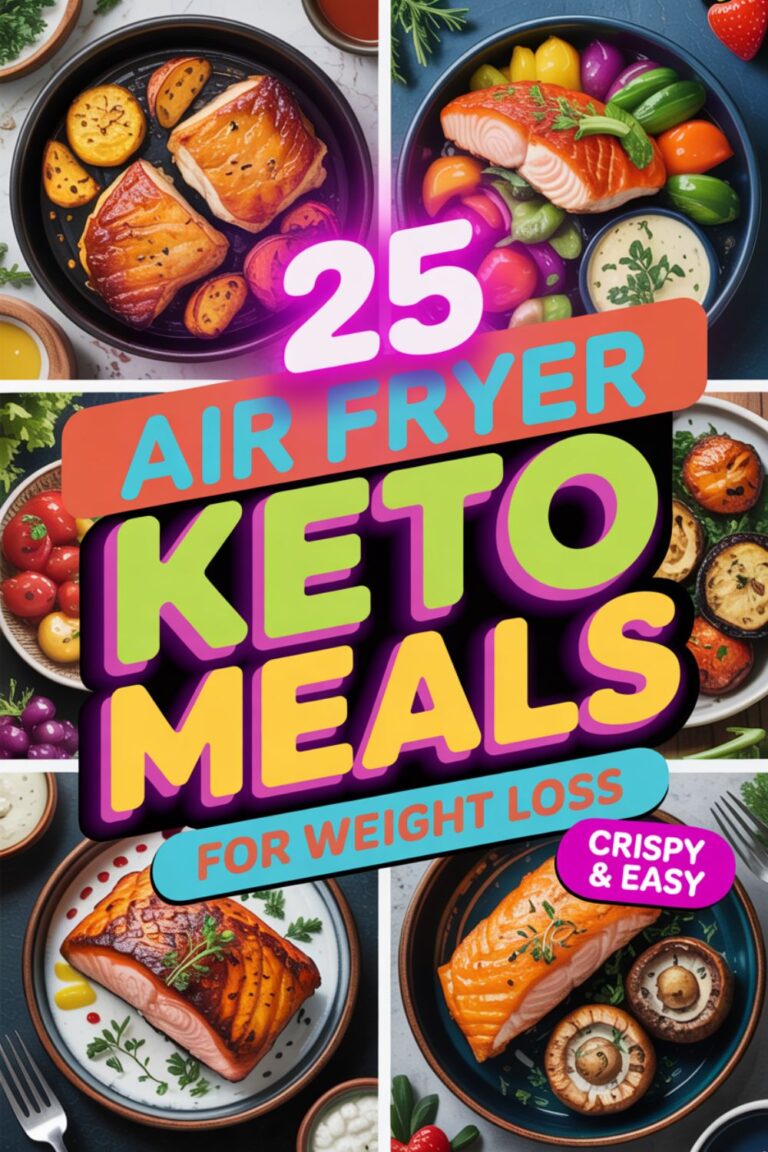
That said, these weight-loss-focused meals are actually helpful if you’re trying to cut calories without feeling deprived. They’re reasonable portions that taste like actual food, not punishment.
I’ve found that the real benefit for weight management is just cooking more at home. The air fryer makes that feasible even when you’re exhausted. When making dinner is quick and produces something you actually want to eat, you order takeout less often. That’s where the difference shows up.
Meal Prep Without Losing Your Mind
Meal prep sounds great until you’re staring at five identical containers of sad chicken and rice, wondering why you do this to yourself. The air fryer won’t fix bad meal prep strategy, but it does make some aspects less painful.
Batch cooking proteins works well. Cook four chicken breasts at once, or a pound of ground turkey, or a bunch of sausages. They all keep well in the fridge for 3-4 days and reheat in the air fryer better than the microwave. Just don’t try to cook everything for the week on Sunday—you’ll burn out and order pizza by Wednesday anyway.
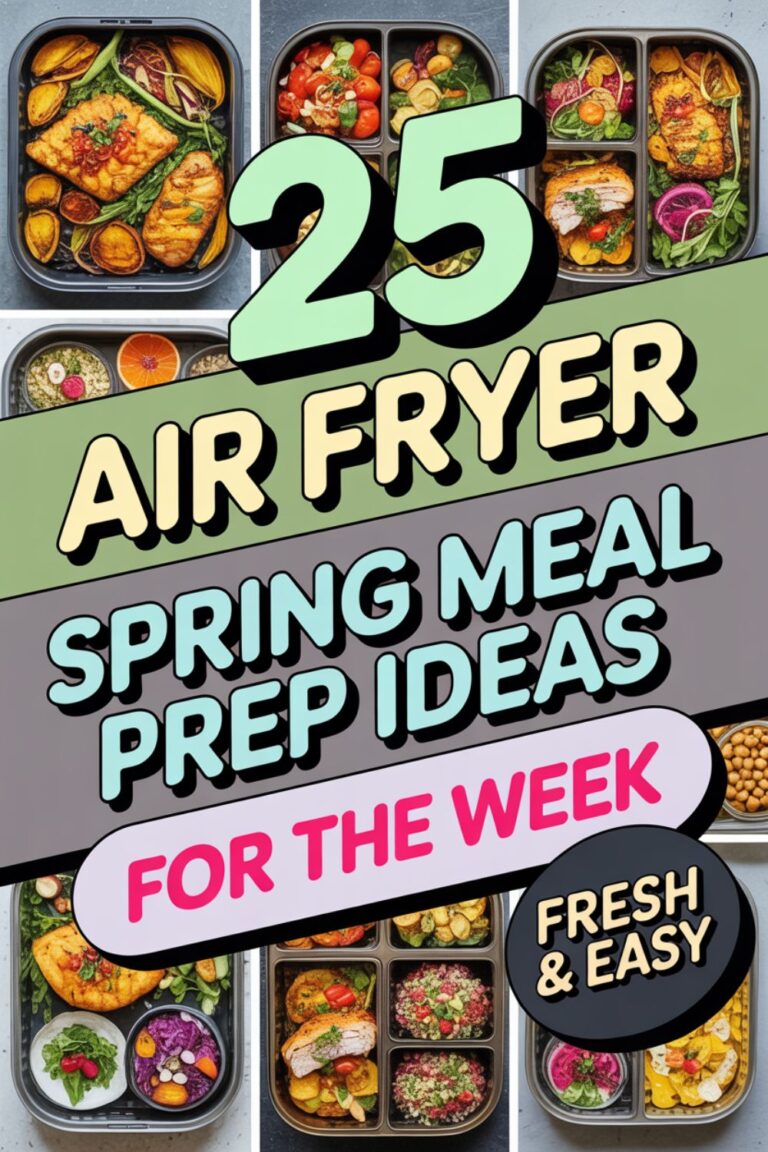
For structured meal prep ideas that don’t require a PhD in organization, check out these weekly meal prep suggestions. They’re designed by someone who clearly understands that most of us aren’t Instagram meal prep influencers.
Prep vegetables ahead by washing and cutting them, but don’t cook them until you need them. Raw broccoli florets keep well in reusable produce bags for days. When dinner time comes, toss them in the air fryer for 10 minutes. Still faster than ordering delivery, tastes fresher than anything you cooked three days ago.
These high-protein quick meals are perfect for meal prep because they’re fast enough that you can make fresh portions throughout the week without it feeling like a chore.
Common Mistakes You’re Probably Making
After talking to a bunch of people about their air fryers, I’ve noticed the same mistakes keep coming up. Here’s what’s making your food worse than it needs to be.
Overcrowding the basket is the number one culprit. Yes, you can fit more food in there, but it won’t cook properly. The hot air needs space to circulate. When pieces are stacked on top of each other, you get steamed food instead of crispy food. Cook in batches if needed—it’s faster than cooking once and being disappointed.
Not drying food before cooking leads to soggy results. Pat meat dry with paper towels. Drain and dry vegetables if they’ve been washed. Moisture is the enemy of crispiness. I learned this the hard way with chicken wings that came out weirdly leathery instead of crispy.
Skipping the preheat gives you inconsistent results. I know I mentioned this earlier, but it bears repeating because people keep skipping it. Three minutes of preheating makes the difference between food that browns properly and food that just sort of cooks without any color.
Using too much oil defeats the purpose. A light spray or toss is enough. If you’re pouring oil like you would for pan frying, you’re just making fried food with extra steps. The air fryer needs barely any oil to work its magic.
For the Beginners Who Feel Overwhelmed
If you just got an air fryer and feel paralyzed by all the possibilities, start simple. Don’t try to make some complex recipe with twelve ingredients and precise timing. Make frozen french fries. Seriously.
Frozen fries teach you how your specific model heats and how often you need to shake the basket. Every air fryer runs slightly differently—some run hot, some have cold spots. Once you’ve made fries a couple times, you’ll understand your machine better.
From there, move to these truly beginner-friendly meals. They assume you don’t know what you’re doing yet, which is refreshing. No judgment, just straightforward instructions.
Then try chicken thighs (harder to mess up than breasts), basic roasted vegetables (broccoli is foolproof), and maybe eggs if you’re feeling adventurous. Build your confidence with simple wins before attempting anything complicated.
These beginner recipes are where I started. Some of them are so simple they barely count as recipes, which is exactly what you need when you’re learning.
Budget-Friendly Cooking That Doesn’t Taste Budget
College students and anyone watching their wallet should know the air fryer is actually a great money-saving tool. It’s cheaper to run than a full oven, and it makes cheap ingredients taste less cheap.
Potatoes become something special. A bag of russet potatoes costs a couple bucks and can be transformed into fries, hash browns, potato wedges, or baked potatoes. Season them differently each time and you’ve got variety without spending more money.
For more budget-conscious meal ideas, check out these cheap student meals. They’re designed for people with limited budgets and even more limited kitchen skills.
Frozen vegetables are criminally underrated. They’re picked at peak ripeness, frozen immediately, and often cheaper than fresh. Air fry them with a bit of seasoning and they taste better than the expensive organic stuff that’s been sitting in your fridge for a week.
Buying whole chickens and breaking them down yourself saves a ton of money. Air fry the pieces as needed throughout the week. Use kitchen shears for easier cutting if you don’t want to deal with a knife. It’s less intimidating than it sounds and saves maybe $2-3 per pound.
The Low-Carb Angle If That’s Your Thing
The air fryer works well for low-carb eating because you can make vegetables interesting without relying on breadcrumbs or batter. Crispy without the coating becomes your default texture.
Cauliflower does everything. Rice it and make fried rice. Cut it into steaks and air fry at 380°F for 18 minutes. Break it into florets and toss with buffalo sauce for fake wings. It’s the most versatile low-carb ingredient that doesn’t taste like you’re trying to trick yourself.
These low-carb meals don’t taste diet-y, which is the highest compliment I can give them. They’re just good food that happens to be low in carbs.
Zucchini noodles get crispy edges in the air fryer, which solves the watery noodle problem. Spiralize them (or buy them pre-spiralized because time is valuable), spray lightly with oil, air fry at 375°F for 8 minutes, then toss with sauce. They have actual texture instead of being soggy strings.
Cheese crisps are stupidly easy and satisfying. Put little piles of shredded cheese on parchment paper in the basket, air fry at 350°F for 5-6 minutes until golden and crispy. Let them cool completely. They’re basically Cheetos but with protein and no weird orange dust.
Questions People Actually Ask
Do I really need to preheat my air fryer?
For most foods, yes. Three to five minutes makes a noticeable difference in how evenly food cooks and how crispy it gets. The exception is foods that need a longer cook time anyway—those can go in cold and you won’t notice much difference. Think of it like preheating your oven, except faster and less annoying.
Why does my food come out dry?
You’re probably cooking it too long or at too high a temperature. Air fryers work faster than ovens, so timing matters more. Also, lean proteins like chicken breast dry out easily—consider using thighs instead, or be religious about checking the internal temperature with a meat thermometer. Nobody likes dry chicken.
Can I use aluminum foil in an air fryer?
Yes, but don’t cover the entire basket floor. You need airflow underneath the food. Use small pieces to catch drips or line the bottom of the basket, but leave the sides open. And never use foil with acidic foods like tomatoes or citrus—it reacts weirdly and can leave a metallic taste.
How do I clean this thing without losing my mind?
Wash the basket after every use—don’t let food residue build up. Most baskets are dishwasher safe, but hand washing with hot soapy water and a non-abrasive sponge works fine. For stuck-on bits, soak the basket for 10 minutes first. Wipe down the inside of the main unit with a damp cloth weekly. It’s way easier to maintain than a regular oven.
Is an air fryer worth it for one person?
Absolutely. Smaller models are perfect for single servings, they heat up faster than ovens, and you won’t be tempted to make huge portions that you end up eating just because they’re there. Plus, cooking for one in a regular oven feels wasteful—all that energy for one chicken breast? The air fryer makes more sense scale-wise.
Final Thoughts on Air Fryer Reality
Here’s what I wish someone had told me when I first got an air fryer: it’s not going to revolutionize your entire cooking life. It won’t make you love vegetables if you hate them. It won’t turn you into someone who meal preps like a fitness influencer. And it definitely won’t make healthy eating effortless.
What it will do is make weeknight cooking less awful. It’ll get dinner on the table in 20 minutes instead of 40. It’ll reheat leftovers better than your microwave. It’ll make vegetables crispy enough that you might actually finish them. And it’ll use less energy than heating up your whole oven for one pork chop.
The best thing about the air fryer is that it’s honest. There’s no complicated controls or settings you’ll never use. You set a temperature and a timer, and hot air does its thing. If something doesn’t turn out right, it’s usually because of timing or temperature, not some mysterious failure of the machine.
Start with the basics. Make things you already know you like—just make them in the air fryer instead of however you usually make them. Once you’ve got the hang of your specific model’s quirks, branch out into new recipes. Don’t try to change your entire eating habits overnight. Just make slightly easier versions of what you already eat.
The air fryer isn’t going to save your life. But it might save dinner a few nights a week. And honestly? That’s enough.