21 Crispy Air Fryer Potatoes (No Oil Needed!)
You’ve been lied to. All those recipes insisting you need to drench potatoes in oil to get them crispy? Completely unnecessary. Your air fryer can deliver perfectly crispy potatoes with zero oil, and honestly, they taste better this way.
I stumbled onto this oil-free method out of sheer laziness. Ran out of olive oil mid-recipe one day, said “screw it,” and tossed plain potato wedges into the air fryer anyway. Guess what? They came out golden, crispy, and somehow lighter than their oil-soaked counterparts. No greasy fingers. No unnecessary calories. Just pure potato perfection.
Let’s talk about why this works and how you can make it happen in your own kitchen.
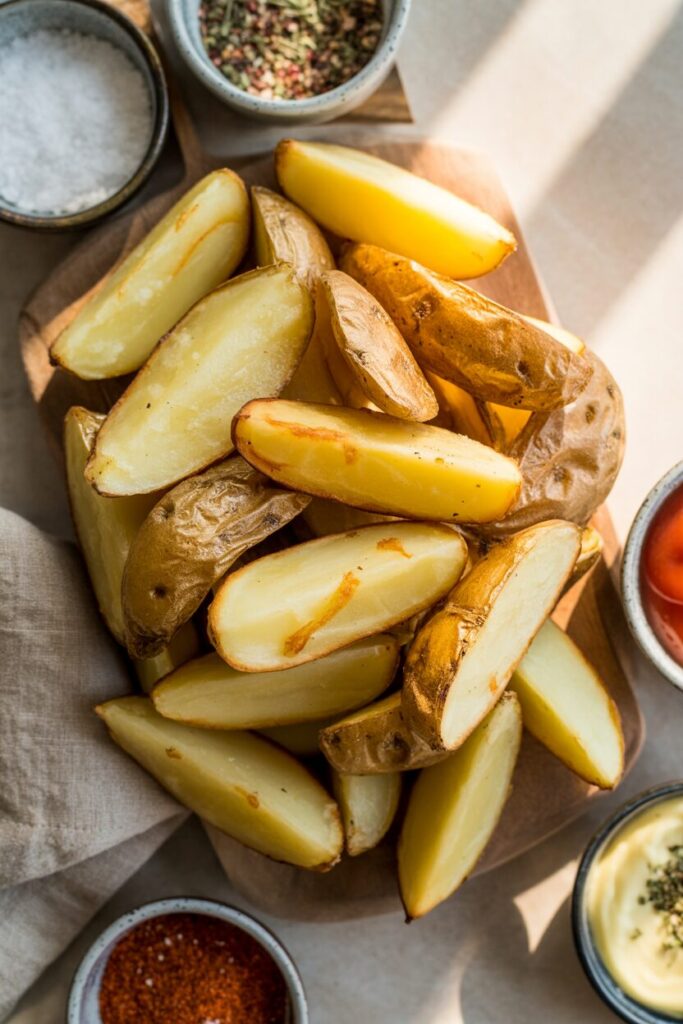
The Science Behind Oil-Free Crispy Potatoes
Here’s the thing most people don’t realize: potatoes already contain everything they need to get crispy. They’ve got starch and moisture, and when you apply high heat with proper air circulation, that natural starch transforms into a crispy coating all by itself.
Air fryers work by circulating superheated air around food at speeds that would make your oven jealous. This rapid air movement pulls moisture away from the potato’s surface while simultaneously cooking the starches. The result? A crispy exterior without drowning your food in fat.
Potatoes naturally provide vitamin C, B6, and potassium, plus antioxidants that combat free radicals in your body. When you skip the oil, you’re getting all these nutritional benefits without the added calories. A medium potato has around 164 calories naturally—why add another 120 calories of oil when you don’t need it?
The key is understanding that oil isn’t what makes things crispy. Heat and dehydration make things crispy. Oil just happens to be a really efficient heat conductor. But your air fryer? It conducts heat even better.
Why Oil-Free Actually Tastes Better
I know this sounds counterintuitive. We’ve been programmed to think fat equals flavor. But here’s my honest take: oil-free potatoes taste more like actual potatoes.
When you coat potatoes in oil, you’re essentially creating a barrier between the potato and the heat. Sure, the oil gets hot and helps with browning, but it also prevents some of that direct heat contact that creates those ultra-crispy edges.
Without oil, the potato’s natural sugars caramelize directly on the surface. You get a cleaner, more pure potato flavor with a seriously addictive crunch. Plus, your seasonings stick better to a slightly damp potato surface than they do to an oil-slicked one.
For more ways to maximize potato flavor in your cooking, try these garlic herb roasted potatoes or these crispy breakfast hash browns—both work beautifully with the oil-free method.
Getting Started: What You Need
You don’t need specialized equipment beyond a basic air fryer. But a few tools make the process smoother.
A Good Air Fryer: Any model works, but I’m partial to this basket-style air fryer that gives maximum air circulation. The basket design beats the oven-style ones for achieving even crispiness without oil.
Mandoline Slicer: For consistent thickness, this adjustable mandoline is a game-changer. Uniform slices mean uniform cooking, which means no sad soggy pieces next to burnt ones.
Silicone Brush: Even when you’re not using oil, a silicone basting brush is perfect for adding a light coat of water or egg white when you need extra seasoning adhesion.
Kitchen Scale: Not essential, but this digital kitchen scale helps you portion potatoes evenly so they cook at the same rate. Consistency matters when you’re working without oil to compensate.
Wire Cooling Rack: After cooking, this stackable cooling rack keeps your potatoes crispy by preventing steam buildup. Learned this the hard way after watching perfectly crispy wedges turn soggy sitting on a plate.
Preparing Potatoes the Right Way
Your potato prep makes or breaks the final result. Skip these steps and you’ll end up with disappointing results, then blame the oil-free method instead of your technique.
Choose the Right Potato: Starchy potatoes like russets work best for maximum crispiness. Waxy potatoes like reds hold their shape better but don’t get quite as crispy. Yukon golds split the difference nicely.
Cut Consistently: Seriously, this matters. All your pieces should be roughly the same size. If one wedge is twice as thick as another, they won’t cook evenly. Use that mandoline or at least pay attention while you’re cutting.
Soak or Don’t Soak: This is controversial. Soaking removes excess surface starch and can help with crispiness. But honestly? I rarely bother unless I’m making fries. For wedges and chunks, skip the soak and save yourself 30 minutes.
Dry Thoroughly: This is non-negotiable. Pat your potatoes completely dry with paper towels or these reusable kitchen towels. Moisture is the enemy of crispiness. Every drop of water you leave on the surface is a drop that needs to evaporate before the potato can brown.
Season Smart: Season your potatoes while they’re still slightly damp from washing. The moisture helps seasonings stick. Once they’re dry, seasonings just roll off.
21 Ways to Make Oil-Free Crispy Potatoes
Let’s get into the actual recipes. These aren’t complicated—that’s the whole point. Each one starts with the same basic method but takes a different flavor direction.
Classic Cuts
1. Perfect Potato Wedges
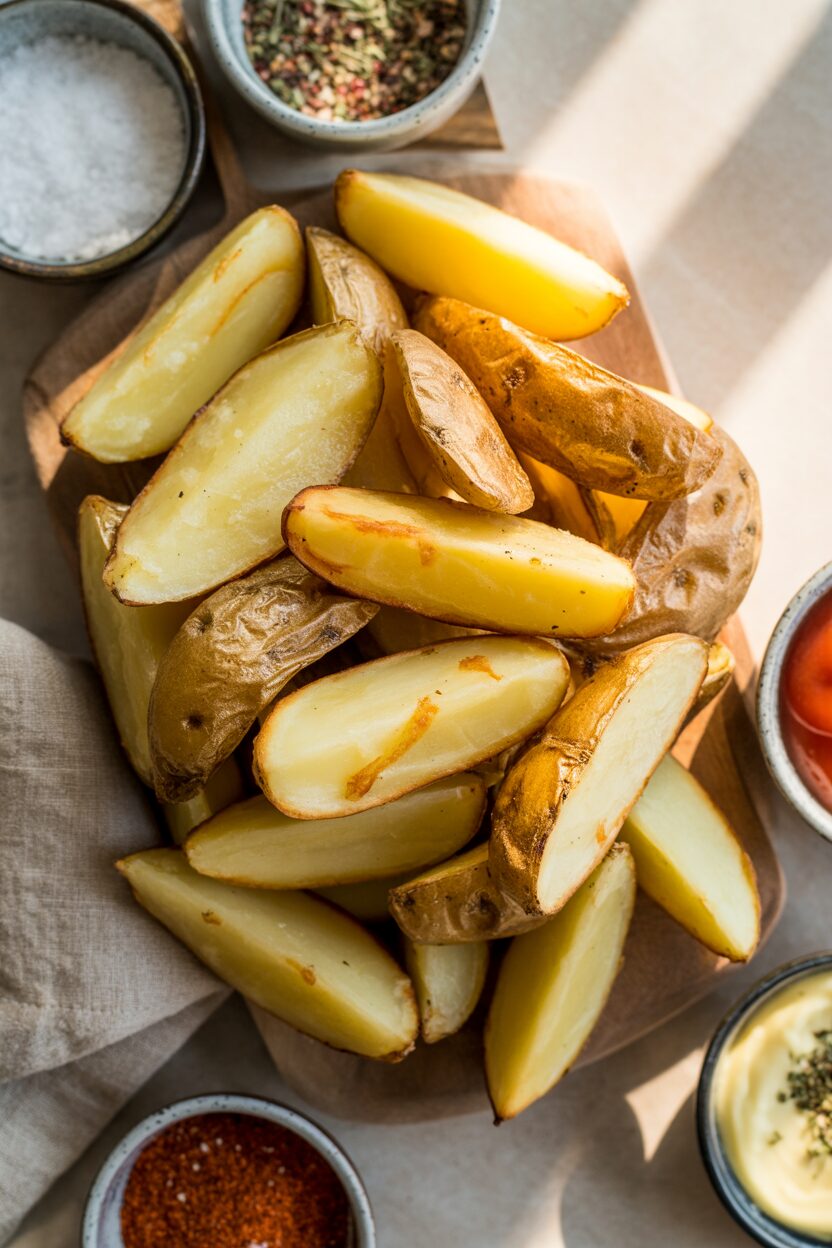
Cut potatoes into 8 wedges each, season with salt and garlic powder, and air fry at 400°F for 20 minutes, shaking halfway through. The thick wedges get crispy outside while staying fluffy inside. Get Full Recipe.
2. Shoestring Fries
Slice potatoes into matchsticks, toss with cornstarch for extra crispiness, and cook at 380°F for 15 minutes, shaking every 5 minutes. They come out impossibly crispy without a drop of oil.
3. Steak Fries
Cut into thick planks, season generously, and air fry at 400°F for 25 minutes. These need the extra time because of their thickness, but the wait pays off in a seriously satisfying crunch.
4. Waffle Fries
Use this waffle fry cutter to create that iconic shape, then cook at 380°F for 18 minutes. The increased surface area means extra crispy edges.
5. Curly Fries
Spiral-cut potatoes using this spiralizer, dust with paprika and garlic powder, and air fry at 375°F for 20 minutes. More surface area equals more crispy bits, which is the whole point.
Seasoned Favorites
6. Salt and Vinegar Potatoes
Spritz cut potatoes with white vinegar before seasoning with salt. Air fry at 390°F for 22 minutes. The vinegar doesn’t just add flavor—it helps break down the surface for extra crispiness.
7. Cajun Spiced Wedges
Coat with Cajun seasoning and a pinch of cayenne. Cook at 400°F for 20 minutes. The spices toast slightly in the air fryer, intensifying their flavor. Serve with spicy remoulade sauce for dipping.
8. Ranch Seasoned Fries
Toss with dried ranch seasoning mix before cooking at 385°F for 18 minutes. Kids go nuts for these, and adults pretend they’re making them for the kids.
9. Lemon Pepper Potatoes
Season with lemon zest, black pepper, and salt. Air fry at 390°F for 20 minutes. The citrus brightens up the earthy potato flavor in a way that feels almost fancy.
10. Everything Bagel Potatoes
Coat with everything bagel seasoning—yes, really. Cook at 380°F for 20 minutes. These are weirdly addictive and go great with eggs for breakfast.
Looking for more seasoning inspiration? Check out loaded breakfast potatoes and herb-crusted potato coins for flavor combinations that work beautifully oil-free.
International Flavors
11. Paprika Potatoes
Season heavily with smoked paprika, garlic powder, and salt. Air fry at 400°F for 22 minutes. The paprika creates this beautiful brick-red color and smoky depth.
12. Curry Spiced Potatoes
Dust with curry powder and a pinch of turmeric. Cook at 390°F for 20 minutes. Serve with mango chutney or yogurt sauce for dipping.
13. Zaatar Potatoes
Coat with zaatar spice blend and a squeeze of lemon after cooking. Air fry at 385°F for 20 minutes. This Middle Eastern twist is unexpectedly perfect on potatoes.
14. Taco Seasoned Fries
Toss with taco seasoning before cooking at 380°F for 18 minutes. Serve alongside quick bean dip or guacamole for a complete snack.
15. Italian Herb Potatoes
Season with dried basil, oregano, and rosemary. Air fry at 390°F for 22 minutes. These pair perfectly with any pasta dish or Italian-inspired meal.
Specialty Cuts and Styles
16. Hasselback Potatoes
Slice potatoes thinly but not all the way through, creating an accordion effect. Season between the slices and cook at 375°F for 30 minutes. The thin layers get crispy while the base stays creamy. Get Full Recipe.
17. Potato Chips
Slice paper-thin using your mandoline, season lightly, and cook at 360°F for 12-15 minutes, checking frequently. Homemade chips without oil? Yes, it’s possible.
18. Breakfast Hash
Dice potatoes small, add diced onions, and season with salt and pepper. Cook at 400°F for 20 minutes, shaking every 5 minutes. Top with fried eggs for a complete breakfast.
19. Smashed Potatoes
Boil small potatoes until tender, smash gently with a fork, season, and air fry at 400°F for 15 minutes. The irregular surface creates loads of crispy edges.
20. Tornado Potatoes
Spiral-cut a whole potato on a skewer, stretch it out, season, and air fry at 375°F for 25 minutes. They look impressive and maximize the crispy surface area.
21. Potato Skins
Scoop out baked potatoes, cut the skins into strips, season, and air fry at 400°F for 10 minutes. Load them with toppings after cooking for a lighter take on the classic appetizer.
Troubleshooting Common Problems
Not getting the results you want? Let’s fix it.
Potatoes Aren’t Crispy Enough: You’re probably overcrowding the basket. Air needs to circulate around each piece. Cook in batches if necessary. Also, try increasing the temperature by 10-15 degrees.
Potatoes Burning on Outside, Raw Inside: Your temperature is too high or your pieces are too thick. Lower the temp to 375°F and cut your potatoes smaller. Thick cuts need lower heat and longer cooking times.
Uneven Cooking: This is almost always a cutting issue. Make sure all pieces are the same size. Also, shake that basket every 5-7 minutes without fail.
Potatoes Sticking to Basket: The basket probably needs cleaning, or your potatoes are still too wet. Line your basket with perforated parchment paper designed for air fryers, but make sure it has holes for air circulation.
Potatoes Tasting Bland: You’re not using enough seasoning. Without oil to carry flavors, you need to be generous with your seasonings. Season in layers—some before cooking, some immediately after.
The Temperature and Timing Sweet Spot
Different cuts need different approaches. Here’s what I’ve found works consistently:
Thin Cuts (Chips, Shoestring Fries): 360-380°F for 12-18 minutes. These cook fast and can burn quickly, so keep an eye on them.
Standard Cuts (Regular Fries, Wedges): 380-400°F for 18-22 minutes. This is your sweet spot for most applications.
Thick Cuts (Steak Fries, Wedges): 375-390°F for 22-28 minutes. Lower heat prevents burning the outside before the inside cooks through.
Specialty Items (Hasselback, Whole Potatoes): 350-375°F for 25-35 minutes. These need gentler heat to cook evenly throughout.
Every air fryer runs a bit differently. These times and temps are starting points. The first time you make something, check it a few minutes early so you can adjust for your specific machine.
For meal planning around these cook times, pair your potatoes with 15-minute protein bowls or quick sheet pan dinners for complete meals that come together fast.
Nutritional Perks of Oil-Free Potatoes
Healthline explains that potatoes are naturally fat-free, cholesterol-free, and surprisingly nutritious when prepared properly. A medium potato delivers vitamin C, potassium, and dietary fiber—all without adding unnecessary fats.
By skipping the oil, you’re saving roughly 120 calories per tablespoon you would have used. Over the course of a week, if you make potatoes twice, that’s nearly 500 calories saved without sacrificing any of the crispy texture you’re after.
Plus, potatoes contain resistant starch, especially when cooled and reheated. This type of starch acts more like fiber in your body, feeding beneficial gut bacteria and potentially improving digestive health. When you fry potatoes in oil, you diminish some of these benefits.
IMO, the best part is that you can actually taste the potato. Oil mutes flavors—it coats your tongue and dulls your taste buds. Oil-free potatoes let the natural earthy sweetness come through.
Making It Work for Meal Prep
Oil-free potatoes are perfect for meal prep because they reheat beautifully. Here’s how to do it right.
Batch Cooking: Cook 4-5 pounds of potatoes at once, rotating batches through your air fryer. Store in the fridge for up to 5 days in airtight containers.
Reheating: Air fry at 375°F for just 5-7 minutes. They crisp right back up. Way better than microwaving, which turns them into sad, rubbery shadows of their former selves.
Freezing: Cut and season potatoes, but undercook them by 5 minutes. Let cool completely, freeze in a single layer on a baking sheet, then transfer to freezer bags. Cook from frozen, adding 5-7 minutes to the original cooking time.
Pre-Prepping: Cut and season potatoes up to 24 hours ahead. Keep them in the fridge submerged in water to prevent browning. Dry thoroughly before cooking.
Want more meal prep inspiration? Try make-ahead breakfast casseroles and freezer-friendly lunch bowls that pair perfectly with these potatoes.
Seasoning Strategies That Actually Work
Without oil to help seasonings stick, you need different strategies.
The Damp Method: Season right after washing while potatoes are still slightly wet. The moisture acts as an adhesive. Just remember to pat them semi-dry afterward—you want damp, not dripping.
The Egg White Trick: Whisk one egg white until slightly frothy, toss potato pieces in it, then add seasonings. The egg white dries to a thin, crispy coating that holds seasonings beautifully. Adds protein too.
The Cornstarch Technique: Dust potatoes lightly with cornstarch before seasoning. The cornstarch absorbs surface moisture and creates an ultra-crispy coating that holds seasonings in place.
The Two-Stage Season: Season before cooking with basics like salt and pepper. Then immediately after cooking, hit them with finishing seasonings like fresh herbs, parmesan, or specialty salts while they’re still steaming hot.
The Spray Bottle: Fill this fine-mist spray bottle with water or broth. Give potatoes a light spritz, add seasonings, then air fry. The moisture evaporates during cooking but helps seasonings adhere initially.
When to Actually Use Oil
Look, I’m not anti-oil. There are times when adding a tiny bit makes sense.
If you’re making potatoes to serve to someone who’s skeptical about oil-free cooking, a light spray of oil gives you the same crispiness but with all the familiar golden color and flavor they expect. It’s a psychological thing.
For certain styles like loaded potato skins where you want cheese to melt and adhere perfectly, a microscopic amount of oil helps create that restaurant-quality finish.
If you’re cooking at lower temperatures for longer times, a bit of oil can prevent the potatoes from drying out too much before they crisp up.
But honestly? 90% of the time, you don’t need it. Give the oil-free method a fair shot for a week or two. Your taste buds will adjust, and you might find you actually prefer it.
Pairing Suggestions
Crispy potatoes need proper accompaniments to shine.
For Breakfast: Serve alongside fluffy scrambled eggs, turkey sausage patties, or vegetable frittatas. The potatoes add the satisfying carb component that makes breakfast feel complete.
For Lunch: Pair with grilled chicken wraps or quick grain bowls. The crispy texture contrasts nicely with softer lunch components.
For Dinner: These potatoes work as a side for practically anything—grilled meats, roasted vegetables, or even just a simple salad. They’re especially good with baked salmon or herb-roasted chicken.
For Snacking: Serve with homemade ranch dip, spicy ketchup, or garlic aioli. Sometimes potatoes are the meal, and that’s completely fine.
Storage and Reheating Tips
Proper storage keeps your potatoes crispy-ready.
Store cooked potatoes in the fridge in a container with paper towels on the bottom and top. The towels absorb excess moisture that would otherwise make the potatoes soggy. They’ll keep for 4-5 days this way.
Never store potatoes in an airtight container while they’re still warm. Let them cool to room temperature first, or you’ll create a steam bath that destroys all that hard-won crispiness.
Reheat in the air fryer at 375°F for 5-7 minutes. Don’t microwave—you’ll end up with mushy, rubbery potatoes that taste nothing like the crispy originals.
If you’re taking potatoes on the go, use these insulated food containers that keep them warm without trapping steam. The venting system prevents sogginess.
Related Recipes You’ll Love
Looking for more ways to use your air fryer and keep things healthy? Here are some recipes that take the same minimalist, oil-free approach:
More Potato Variations:
- Sweet Potato Fries—naturally sweet and crispy without any oil
- Loaded Breakfast Potatoes—topped with eggs and veggies for a complete meal
- Herbed Fingerling Potatoes—elegant enough for dinner parties
Other Air Fryer Favorites:
- Crispy Brussels Sprouts—another vegetable that gets amazingly crispy oil-free
- Air Fryer Vegetable Medley—mixed veggies that rival any roasted version
- Crunchy Chickpeas—perfect snack that proves air fryers work magic on more than just potatoes
The Bottom Line
Oil-free crispy potatoes aren’t a compromise—they’re genuinely better. You’re not sacrificing anything except unnecessary calories and that greasy feeling you get after eating too many regular fries.
The learning curve is minimal. Make one batch. If they don’t turn out perfectly the first time, adjust your technique and try again. By your third attempt, you’ll have it dialed in for your specific air fryer and preferences.
Start with basic wedges or fries. Master those, then experiment with seasonings and cuts. Before you know it, you’ll have a whole rotation of oil-free potato recipes that you actually want to eat multiple times a week.
The goal isn’t perfection on day one. The goal is figuring out a method that works for you and your schedule. If that means using a tiny spritz of oil at first while you build confidence, fine. But I’m betting you’ll go fully oil-free faster than you expect.
Because once you realize that crispy potatoes don’t need to be drenched in fat to taste amazing, you start questioning what other “rules” are actually just habits. And that’s when cooking gets really interesting.